White Cardamom Food Safety: HACCP for Tropical Sun-Drying
For international spice importers and food manufacturers, safety is not just a preference—it’s a prerequisite. A single contamination incident can disrupt supply chains, damage brands, and incur costly recalls. In the misty highlands of Tasikmalaya, West Java, TasikSpice meets this challenge head-on with our signature product: White Cardamom (known locally as kapulaga putih). Despite relying on the age-old method of sun-drying, we apply rigorous Hazard Analysis and Critical Control Points (HACCP) principles to deliver whole pod cardamom that is both aromatic and impeccably safe. As the 2026 harvest approaches, this post unveils how we transform a tropical climate risk into a competitive advantage for bulk cardamom Indonesia exports.
Sun-drying is the most sustainable and cost-effective way to cure spices, but in a humid equatorial environment, it demands precise management. Without HACCP, the process can introduce biological hazards—mould, yeast, salmonella—and physical contaminants like dust, insects, or bird droppings. At TasikSpice, we’ve integrated the seven HACCP principles into every step, from the farm to the shipping container, ensuring our Indonesian cardamom meets Codex Alimentarius and stringent EU/US safety standards.
Applying HACCP to Sun-Dried Spice Production
Traditional drying methods often lack systematic controls, but we have transformed them into a validated food safety system. The first step is a thorough hazard analysis for sun-drying fresh White Cardamom pods. The primary risks identified are microbial proliferation due to slow drying, reabsorption of moisture during the night, and contamination from pests. Based on this, we established three critical control points (CCPs): the initial drying phase during the first 48 hours, the transition to indoor curing, and the final moisture verification.
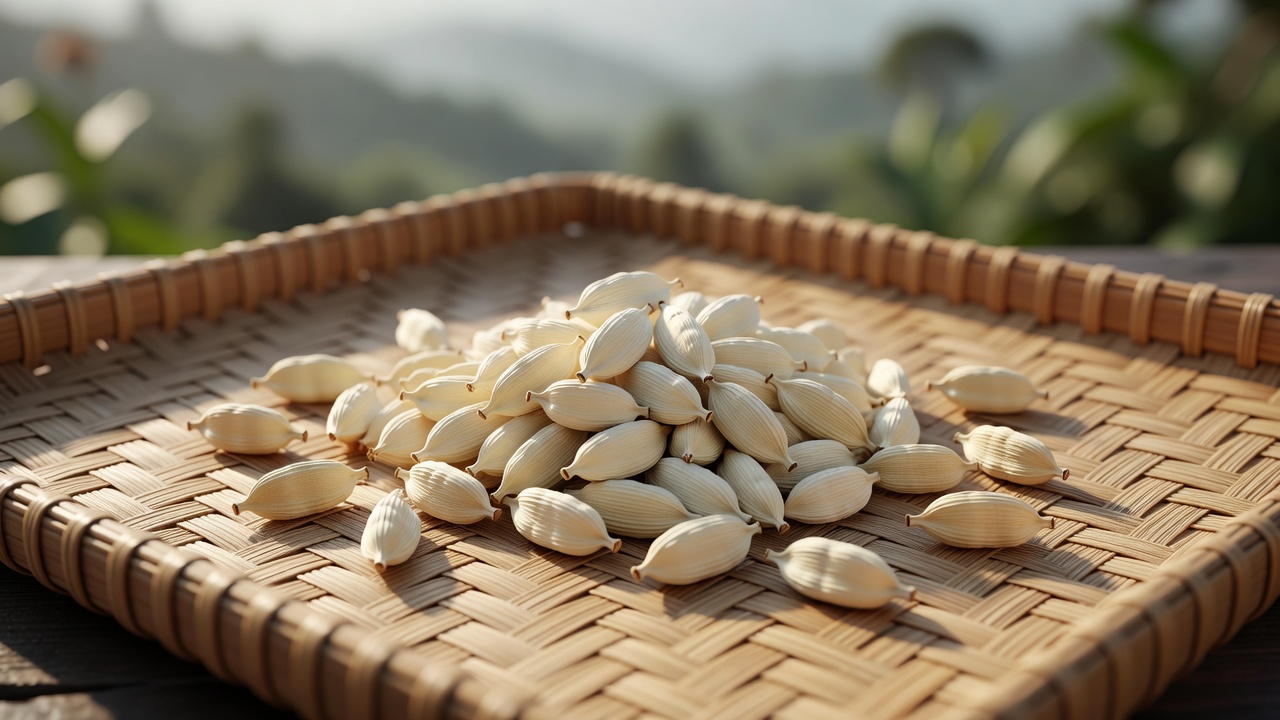
CCP 1: Rapid Initial Drying. Freshly harvested pods (at the optimal yellowish-green stage) hold up to 80% moisture and must be brought below 20% within two days to halt enzymatic browning and microbial growth. Our farmers spread the pods in thin layers on elevated bamboo trays, which allow airflow from beneath. They are placed in full sun on concrete drying yards—cleaned and sanitized daily. The temperature of the pods is monitored; we target a surface temperature of 40-45°C to preserve volatile oils while inhibiting bacteria. Turning the pods every hour with sanitized implements is mandatory and recorded.
CCP 2: Night-Time Protection. In our tropical climate, evening dew can raise the moisture content back into the danger zone. As the sun sets, workers immediately cover the trays with fine-mesh, food-grade netting that is elevated to prevent contact with the pods. This netting also blocks insects, birds, and windborne debris. Additionally, a simple rain-sensing alert system—often just a dedicated watcher with a horn—ensures that if an afternoon storm approaches, the pods are rushed under covered sheds within minutes. Any batch exposed to unexpected rain is flagged and sent for re-washing and rapid mechanical drying before returning to the sun-drying cycle, a corrective action documented in our HACCP plan.
CCP 3: Moisture Endpoint Verification. After 5 to 7 days of sun exposure, the pods achieve a pale, straw-like color and audible rattling seeds. But appearance alone isn’t sufficient. We use calibrated digital moisture meters to test multiple samples from each batch. The critical limit is ≤10% moisture content. Batches exceeding this are either further dried in a solar tunnel dryer or rejected. Only pods meeting the specification are moved to a clean, humidity-controlled storage area. Throughout this process, we maintain logs for temperature, drying duration, and corrective actions, providing full traceability.
Moisture Control: The Heart of Aflatoxin Prevention
For buyers of whole pod cardamom, aflatoxins are a top concern. These mycotoxins, produced by Aspergillus fungi, thrive when moisture and temperature are unchecked. Our Tasikmalaya highland location (around 700-900 meters above sea level) is a natural ally. The altitude brings cooler nights and gentle, persistent breezes that accelerate drying during the day, reducing the window of vulnerability. Nevertheless, we don’t rely on nature alone. Precautionary measures include periodically raking the drying pods to prevent hot spots and using clean, dry jute sacks to absorb any residual surface moisture during the curing phase.
Post-drying, every export lot undergoes an aflatoxin screening (B1 + total) at an accredited Indonesian laboratory, with a strict limit of <5 ppb for total aflatoxins—well below the EU’s 10 ppb limit. The results are included in the certificate of analysis we provide to buyers. Our bulk cardamom Indonesia shipments are packaged in new, food-grade poly-lined jute bags that maintain a stable moisture level during maritime transit. For the 2026 season, TasikSpice offers this premium White Cardamom at an FOB price of $10.30/kg from Tanjung Priok, Jakarta, an exceptional value given the safety and quality assurance built into every kilogram. Contact us on WhatsApp at +62 812-9869-9940 to request a sample or discuss your requirements.
Traceability and Compliance for International Markets
Each individual farm’s harvest is kept separate as a micro-lot, marked with a unique code that links to the farmer’s HACCP records. TasikSpice then consolidates these into export lots, but the code remains, enabling full backward traceability. For a food manufacturer, this means if any question ever arises, we can pinpoint the exact field and even the drying batch. This level of diligence is why our kapulaga jawa is increasingly sought after by spice houses in the Middle East and Europe, who use it for biryani and baked goods, knowing it meets their nation’s import safety protocols.
Our commitment to food safety doesn’t end with HACCP. We are actively training farmers in Good Agricultural Practices (GAP) and are pursuing organic certification for several cooperatives. By the 2026 season, we will have expanded our network to include small-scale solar dryer units to further mitigate weather dependency, all while maintaining the authentic, camphoraceous flavor profile that defines Javanese White Cardamom.
Securing a reliable, safe supply of Indonesian cardamom is a strategic move for any spice importer. To request a sample, a detailed HACCP flow diagram, or a quote for bulk orders of our 2026 harvest, please contact TasikSpice on WhatsApp at +62 812-9869-9940. Our team is ready to discuss your specific requirements and provide all necessary documentation to streamline your procurement process.
Interested in sourcing premium Indonesian spices?
Contact TasikSpice on WhatsApp for FOB pricing, samples, and MOQ details.