Organic Candlenut Certification Journey in Tasikmalaya 2026
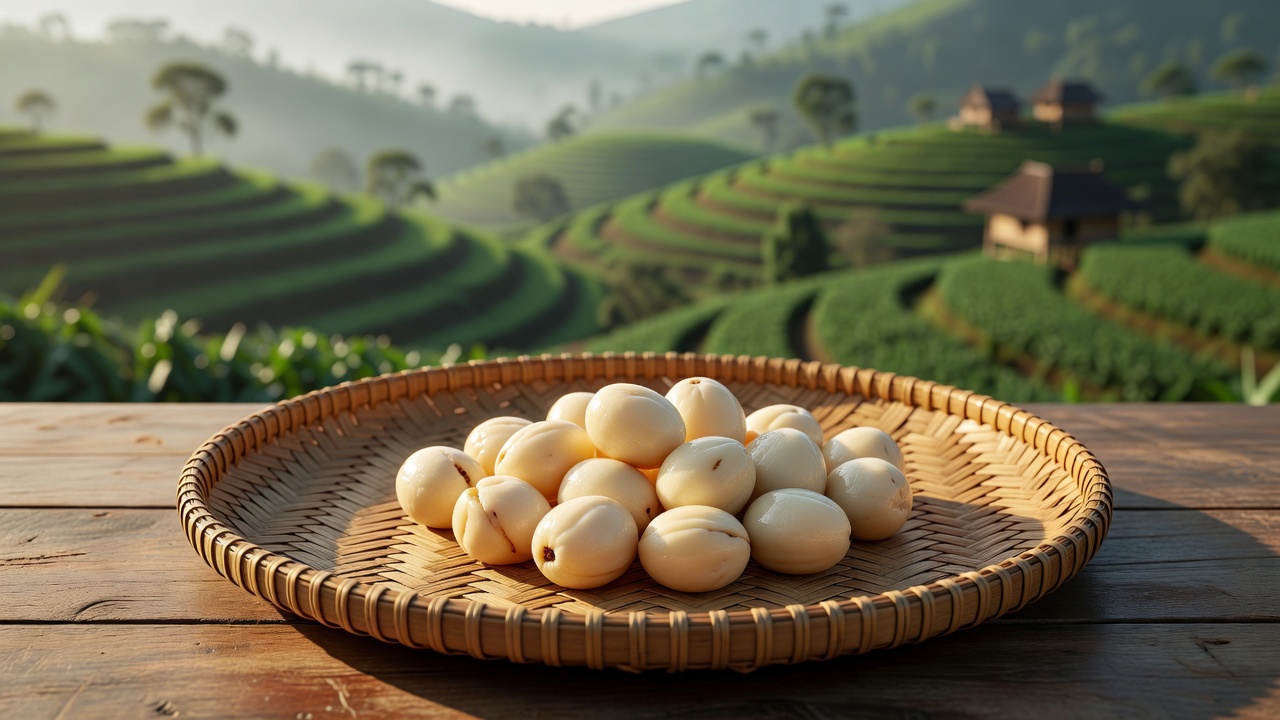
Something remarkable is happening in the cool mists of West Java. Across the Tasikmalaya highland, where candlenut trees (Aleurites moluccanus) have grown alongside coffee and clove for generations, farming families partnered with TasikSpice are making a deliberate choice: no synthetic pesticides, no chemical fertilizers, and a documented three-year path to full organic certification. Known locally as kemiri putih, this creamy white nut is prized worldwide for its rich oil content and its thickening power in sauces and pastes—and by the close of the 2026 season, buyers will be able to source it with internationally recognized organic credentials behind every shipment.
Why Organic Certification Matters for Candlenut Bulk Buyers
Global demand for organically verified spices has shifted from niche to mainstream. European importers now operate under EU Regulation 2018/848, which imposes stricter controls on pesticide residues and demands full traceability from farm to port. Food manufacturers in the Middle East and South Asia increasingly favor clean-label ingredients, while North American private-label brands routinely ask suppliers for organic transaction certificates before contracts are even signed.
Candlenut sits squarely inside this trend. As a key ingredient in curry pastes, sambals, plant-based creams, and cold-pressed oils, it touches a wide range of finished products where residue limits are tested rigorously. For procurement teams sourcing candlenut bulk volumes, partnering with an origin that is actively certifying its supply chain reduces risk today and secures preferential allocation tomorrow.
The Hidden Advantage of Traditional Highland Agroforestry
Tasikmalaya farmers begin this journey with a head start most origins would envy. Because candlenut trees here are traditionally intercropped within mixed home gardens—shaded by taller hardwoods and bordered by banana and coffee—many groves have never received synthetic inputs in the first place. Baseline soil and kernel residue testing conducted across partner plots in 2024 and 2025 confirmed negligible chemical traces, meaning the formal transition period is largely a documentation exercise rather than a detoxification process.
This matters commercially. While a conventional monoculture converting to organic may suffer yield dips during transition, Tasikmalaya's polyculture system keeps trees healthy through biodiversity itself: beneficial insects manage pests naturally, fallen leaves rebuild soil fertility, and shade cover protects kernels from the heat stress that dulls color and degrades oil quality.
Inside the Certification Roadmap: From Farm Audit to Export Lot
Achieving certification across hundreds of smallholder plots requires structure. TasikSpice, working with accredited certification bodies active in Indonesia, has built the program around five pillars:
- Plot registration and GPS mapping. Every participating farm is geotagged, creating an unbroken digital trail from each harvest batch back to its source grove.
- Internal Control System (ICS). A farmer-led committee conducts quarterly internal inspections, maintains input logs, and enforces the approved materials list—a core requirement for group certification under EU and equivalent schemes.
- Buffer zone management. Plots bordering conventional farms are separated with physical barriers and documented drift-risk assessments.
- Farmer field schools. Monthly training covers botanical pest management, compost preparation, and harvest hygiene, so compliance is understood rather than merely imposed.
- Segregated post-harvest handling. Certified lots move through dedicated drying racks and warehousing and never mingle with non-participating crops.
Buyers interested in reserving transitional organic lots ahead of public release can contact the TasikSpice export desk on WhatsApp at +62 812-9869-9940 for sample availability and allocation terms.
Post-Harvest Discipline: Where Organic Quality Is Won or Lost
Certification auditors scrutinize what happens after the nut leaves the tree, and so do we. Kernels are sun-dried on elevated bamboo racks—never directly on soil—until moisture stabilizes below eight percent, locking in the pale cream color and preventing mold development in transit. Drying areas are screened against dust and birds, and storage uses sealed food-grade liners instead of chemical fumigation. These details decide whether a lot passes pre-shipment laboratory analysis, which is why they are embedded in the standard operating procedures for every container TasikSpice packs.
What the 2026 Season Means for Kemiri Spice Procurement
For buyers planning 2026–2027 programs, timing creates opportunity. As of late August 2026, transitional lots are entering the market while certified supply still lags demand—an ideal window to lock in volume. Current conventional-grade pricing stands at $6.30 per kilogram FOB Tanjung Priok, Jakarta, and industry benchmarks suggest fully certified organic lots will command premiums of fifteen to twenty-five percent once certification completes. Securing transitional volumes now positions your portfolio ahead of that price curve.
Every TasikSpice shipment arrives with complete documentation: certificate of analysis, phytosanitary certificate, certificate of origin, and—in short order—the organic transaction certificate that simplifies clearance in regulated markets. Whole kernels, ground powder, and pressed oil are all graded against strict export specifications covering moisture, purity, and defect tolerance.
Choosing a kemiri supplier is ultimately a bet on traceability and consistency. Few origins can combine highland-grown nuts, a functioning smallholder certification program, and direct exporter accountability in a single package. TasikSpice can.
Ready to secure your 2026 allocation? Message TasikSpice on WhatsApp at +62 812-9869-9940 or visit wa.me/6281298699940 for current availability, samples, and FOB quotations—plus our full specification sheet and certification roadmap tailored to your market.
Interested in sourcing premium Indonesian spices?
Contact TasikSpice on WhatsApp for FOB pricing, samples, and MOQ details.