Tasikmalaya Microclimate: Superior Vanilla Beans
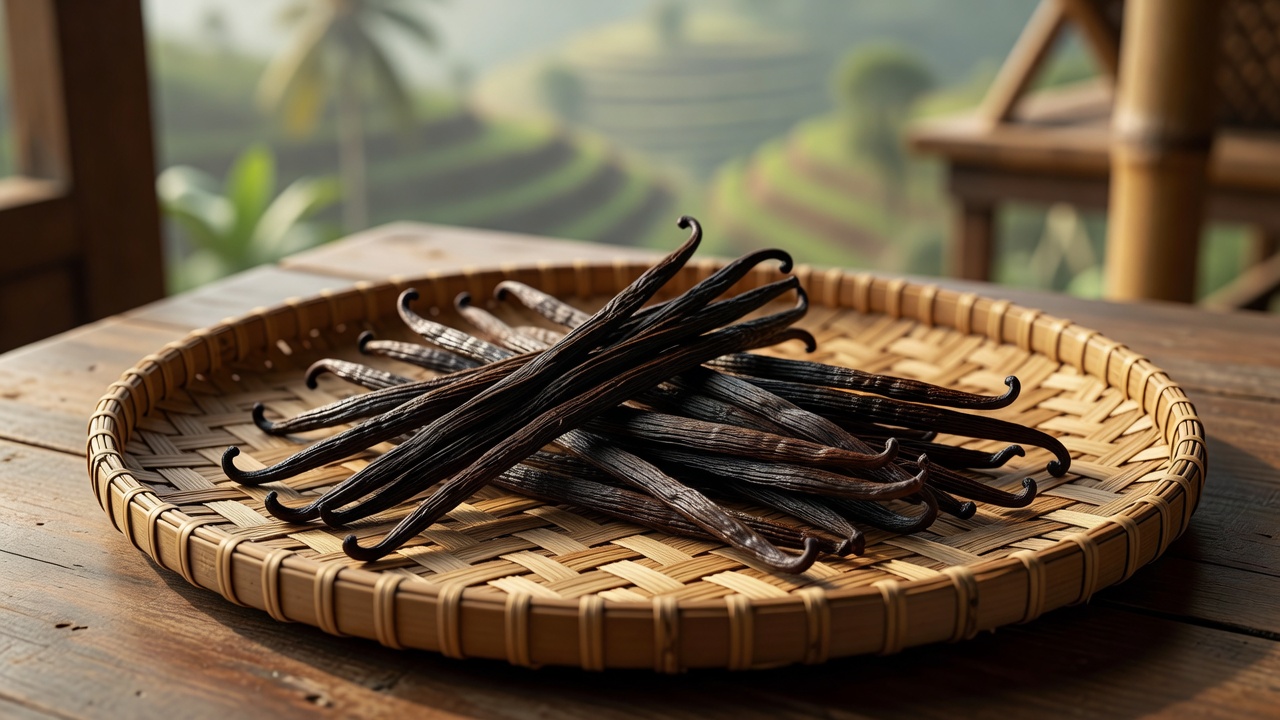
In the volcanic highlands of Tasikmalaya, West Java, a quiet agricultural advantage is reshaping the global spice trade. At elevations above 700 meters, where cool nights meet filtered tropical sunlight, TasikSpice cultivates Vanilla Beans (Vanilla planifolia) with an aromatic depth that bulk buyers increasingly demand. Known locally as vanili, these pods are not a commodity afterthought—they are the direct result of a microclimate that offers natural stress, slow maturation, and higher vanillin accumulation. For importers seeking a reliable vanilla pod supplier for the 2026 season, this origin story matters.
The Tasikmalaya Microclimate: A Natural Curing Chamber
Tasikmalaya’s highland terrain sits between 700 and 1,200 meters above sea level, on the slopes of volcanic mountains that have enriched the soil with andesitic minerals. Unlike lowland vanilla farms in humid coastal areas, this region experiences a pronounced diurnal temperature shift: daytime highs rarely exceed 28°C, while nights can drop to 18°C. That 10-degree swing slows the metabolic activity of the vanilla orchid, extending the pod maturation window by several weeks compared to lowland origins.
The result is a thicker, more resinous vanilla pod with a higher concentration of vanillin—the compound responsible for vanilla’s signature aroma and flavor. Morning mist and well-distributed rainfall from October to March provide consistent moisture without waterlogging, while the dry season from April to September allows for clean flowering and pollination. TasikSpice’s farms also grow cardamom and candlenut in the same volcanic soils, and the same microclimate that gives those spices their pungency also elevates vanilla to export-grade quality.
Annual rainfall in Tasikmalaya averages 2,500–3,000 mm, but the volcanic slopes drain quickly, preventing the root rot that plagues vanilla in wetter lowland regions. This balance of moisture and drainage is rare; even Madagascar’s famed Sava region, while producing excellent vanilla, has faced cyclone risks that Indonesian highland farms avoid entirely.
How Climate Shapes Vanilla Planifolia Quality
Vanilla planifolia is a demanding crop. It needs shade, humidity, and a delicate balance of stress to produce premium pods. In Tasikmalaya, farmers use living shade trees—gliricidia and dadap—to filter sunlight to about 50 percent intensity. Combined with the cool highland air, this slows photosynthesis just enough to push the vine into reproductive mode without sacrificing pod size. The 2026 season is already showing strong flowering across TasikSpice’s partner farms, with early hand-pollination rates exceeding 90 percent due to stable dry-season conditions.
Climate also affects post-harvest potential. Pods grown in cooler microclimates retain moisture more evenly during the curing process, reducing the risk of mold and splitting. For bulk vanilla Indonesia buyers, this translates into longer, plumper pods with an oil content that survives long-haul shipping. TasikSpice grades its export vanilla as Grade A (gourmet, 15–19 cm, moisture 28–32%) and Grade B (extractive, 12–15 cm), with each batch tested for vanillin content before shipment.
When you source from a vanilla pod supplier that understands microclimate, you are not just buying beans—you are buying a terroir-driven ingredient. Indonesian vanilla export volumes have risen as buyers in the Middle East, South Asia, and Europe recognize this distinction.
Many TasikSpice partner farms are in transition to organic certification, using composted coffee pulp and goat manure instead of synthetic fertilizers. The cool climate naturally suppresses pests like the vanilla bug, reducing the need for chemical intervention. For buyers seeking clean-label ingredients, this highland origin offers a compelling story of sustainability and traceability.
Sourcing Bulk Vanilla Indonesia from TasikSpice
TasikSpice manages the entire supply chain from Tasikmalaya to the Port of Tanjung Priok in Jakarta. After harvest, green pods undergo the traditional Bourbon curing process: blanching, sweating, drying, and conditioning for three to four months. This slow cure develops the deep, creamy, and slightly smoky notes that industrial flavorists and gourmet chefs seek. The cured pods are then sorted by length, moisture, and appearance, vacuum-packed in food-grade bags, and sealed into export cartons with desiccant packs.
Every 2026 shipment includes a phytosanitary certificate, certificate of origin, and commercial invoice. For buyers who need bulk vanilla Indonesia with consistent grading across container loads, TasikSpice offers flexible volumes from 100 kg trial orders to multi-tonne annual contracts. Because we export FOB Tanjung Priok, Jakarta, you get transparent pricing that reflects the true cost of highland cultivation and careful processing.
To receive the current 2026 season price list and sample availability, contact TasikSpice on WhatsApp. Our export team can provide moisture reports, vanillin assay results, and shipment schedules within one business day.
As global demand for natural vanilla continues to grow, the 2026 season offers a strategic window for importers to lock in high-quality Indonesian vanilla export volumes. TasikSpice’s highland microclimate—the same force behind our cardamom and candlenut—ensures that every pod carries the unmistakable aroma of Tasikmalaya. For spice traders evaluating origins, this microclimate consistency reduces quality variance shipment after shipment. Don’t wait for mid-season shortages; message TasikSpice on WhatsApp today to discuss your vanilla pod supplier requirements.
Interested in sourcing premium Indonesian spices?
Contact TasikSpice on WhatsApp for FOB pricing, samples, and MOQ details.