White Cardamom Grading Checklist for Spice Buyers
Every spice buyer knows a single compromised lot of white cardamom can ruin a finished blend, erode consumer trust, and trigger costly rejections at the port. In the 2026 season, as global demand for Indonesian Amomum compactum continues to climb, the difference between a premium shipment and a disappointing one often comes down to three visual checks: color, aroma, and kernel integrity. Known locally in West Java as kapulaga putih or kapulaga jawa, this round-fruited white cardamom from the Tasikmalaya highland demands a stricter eye than its green cousin. As a cardamom spice supplier, TasikSpice fulfills bulk cardamom Indonesia orders for food manufacturers and spice traders worldwide, and we encourage every importer to use the following checklist before signing a purchase contract.
Color: The First Visual Gate for White Cardamom
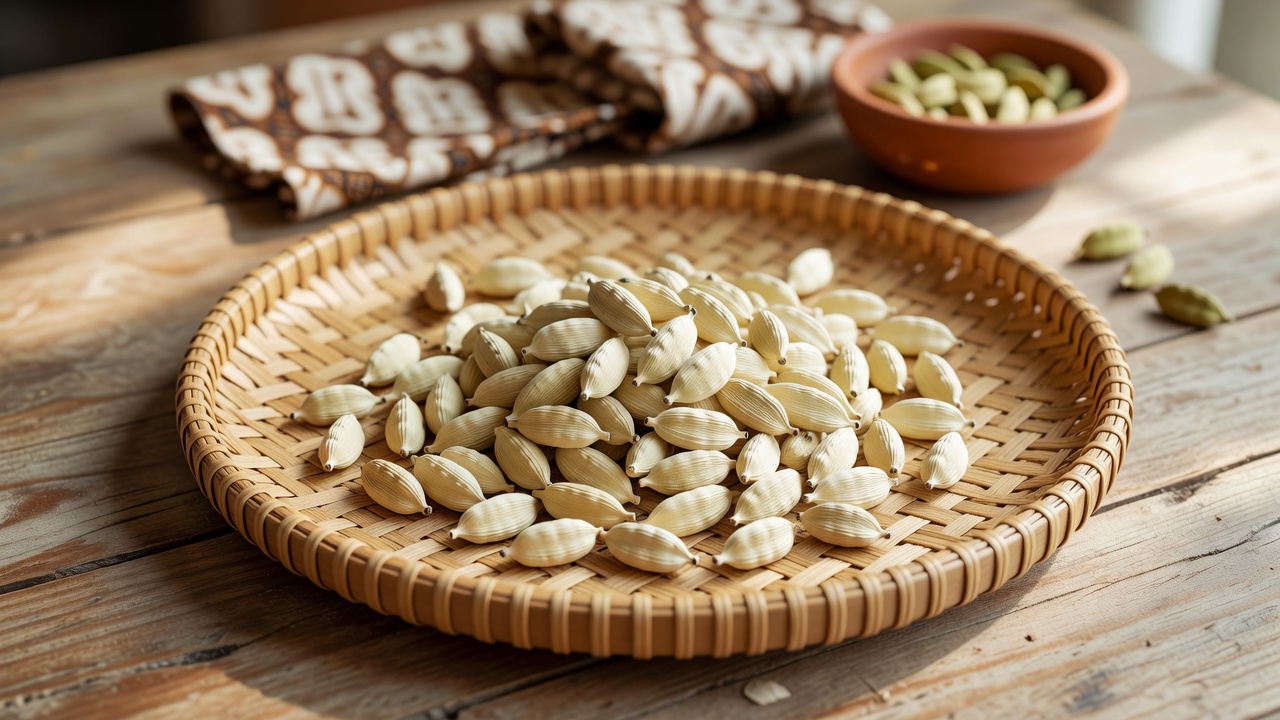
Start with the husk. Premium 2026 white cardamom should display a uniform creamy white to light ivory tone across the entire lot. Avoid lots with grey or brown patches, black speckling, or a yellowed cast—these usually signal excessive heat during drying, prolonged storage in humid conditions, or the presence of immature pods. In the Tasikmalaya highland, our partner farmers harvest the fruit at 70–80% maturity and use a combination of low-temperature mechanical drying and controlled sun exposure to lock in that bright, natural color without chemical bleaching. It is worth repeating that a lot can look perfectly pale yet still fail on aroma, so color is only your first filter. For bulk cardamom Indonesia, we recommend pulling a representative 1 kg sample and laying the pods on a white tray under natural daylight. If more than 5% show off-color husks, request a lower grade or a price adjustment.
Aroma: How to Test for Essential Oil Richness
Crush a pod between your thumb and forefinger and inhale immediately. High-grade Amomum compactum releases a sharp, penetrating eucalyptus-like note with a slightly sweet, resinous undertone. If the aroma is flat, musty, or reminds you of old hay, reject the sample immediately. The 2026 crop from Tasikmalaya typically shows total essential oil content between 3.2% and 4.8%, with 1,8-cineole as the dominant compound. This is what gives white cardamom its cooling, digestive character in Middle Eastern coffee, Nordic bakery spice, and South Asian meat rubs. At TasikSpice, our export line is re-checked for aroma after every 500 kg of processing so that no dull or oxidized pods contaminate a batch. Buyers can request our gas chromatography profile from the last pre-shipment sample, but the warehouse nose test remains one of the fastest and most reliable tools you have.
Kernel Integrity: Cut, Shake, and Inspect
The most telling check happens when you cut a pod open. Inside each Amomum compactum pod, you should find a compact, dark brown to black seed mass that clings together and leaves a slight oily sheen on your fingertip. Shake the pod; a faint rattle is normal, but a loud, hollow rattle means the kernels have shriveled—usually from over-drying, long storage, or pest damage. Look for uniform kernel color without white mold filaments, insect frass, or empty cavities. If the kernels crumble to dust when pressed, the volatile oils have evaporated and the cardamom will taste flat in your final product. In our 2026 sorting facility in Tasikmalaya, every lot passes through a gravity separator and a final hand-picking station to remove split, insect-damaged, and underfilled pods before bagging. The following export-grade parameters are what we apply to every TasikSpice shipment:
- Moisture: 10–12% maximum to prevent mold and preserve kernel adhesion.
- Broken pods: Less than 3% for premium export grade.
- Foreign matter: Below 1%, with zero live insects or visible mold.
- Essential oil: Minimum 3.0% v/w, confirmed by a third-party certificate of analysis.
- Color tolerance: No more than 5% off-color pods in a representative 1 kg sample.
TasikSpice sources white cardamom directly from smallholder farmers in the Tasikmalaya highland, West Java, where cool mountain air and volcanic soil produce pods with a naturally higher oil content. For the 2026 season, our FOB Tanjung Priok price for clean, machine-sorted Grade A white cardamom is USD 10.30 per kilogram, packed in food-grade polypropylene bags with an inner liner at 25 kg or 50 kg net. We also offer custom packaging and private-label options for buyers in the Middle East, Europe, and North America. Apply the color, aroma, and kernel integrity checklist above when you evaluate our samples against any other lot on the market—we are confident the Tasikmalaya origin will stand out. Contact TasikSpice on WhatsApp at +62 812-9869-9940 to request a sample, a certificate of analysis, or a current availability quote for your next shipment.
Interested in sourcing premium Indonesian spices?
Contact TasikSpice on WhatsApp for FOB pricing, samples, and MOQ details.